Geli’s patented gel-bead technology helps reduce two factors that disrupt recovery during sleep: pressure buildup and excessive heat. Your body can finally recover more effectively overnight.

A revolutionary sleep surface designed to promote more restorative rest.

The critical zone of 32 mmHg

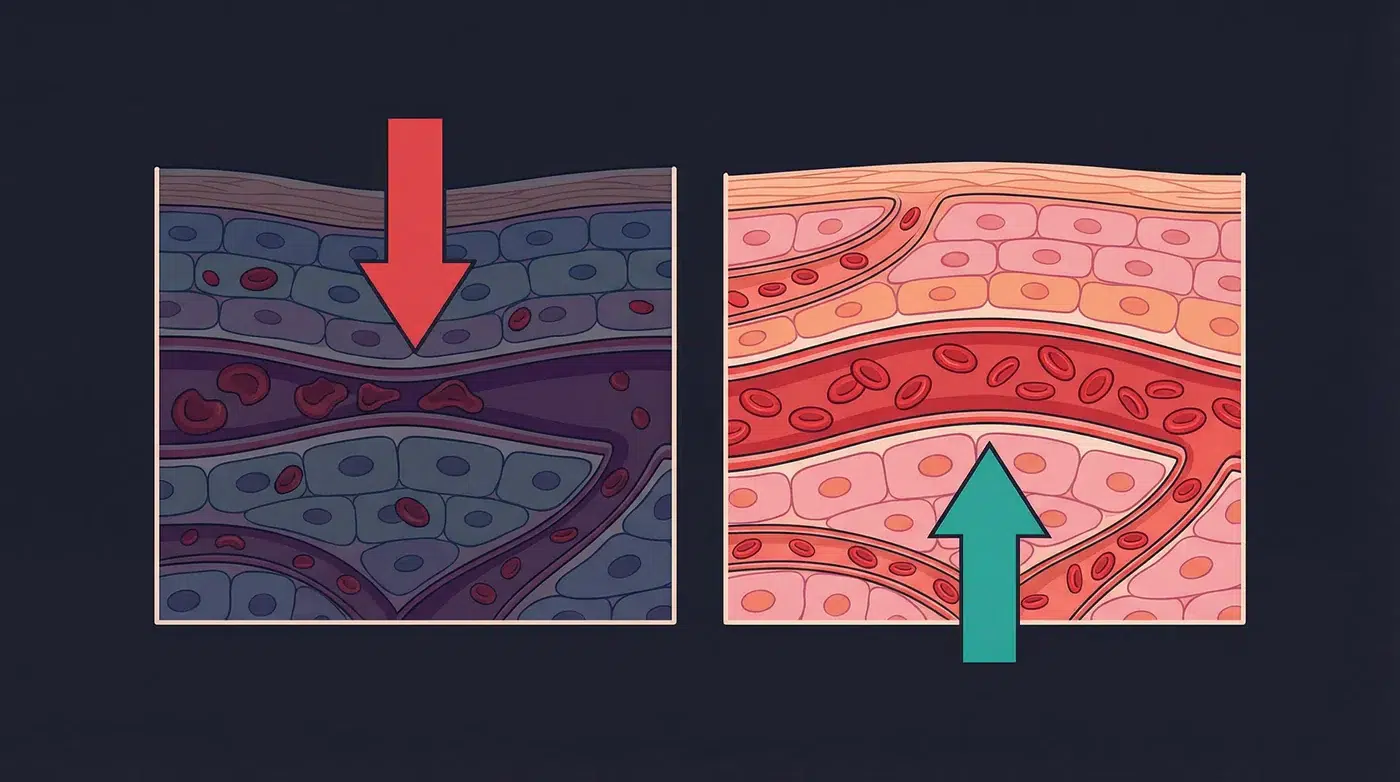
When the pressure exerted on the body exceeds approximately 32 mmHg, blood circulation can be restricted in contact areas such as the shoulders, hips, and back.

Surfaces that concentrate too much pressure exert greater compression on tissues and can disrupt recovery during sleep.

Conversely, better pressure redistribution helps the body remain more relaxed and better supported throughout the night.

Memory foam
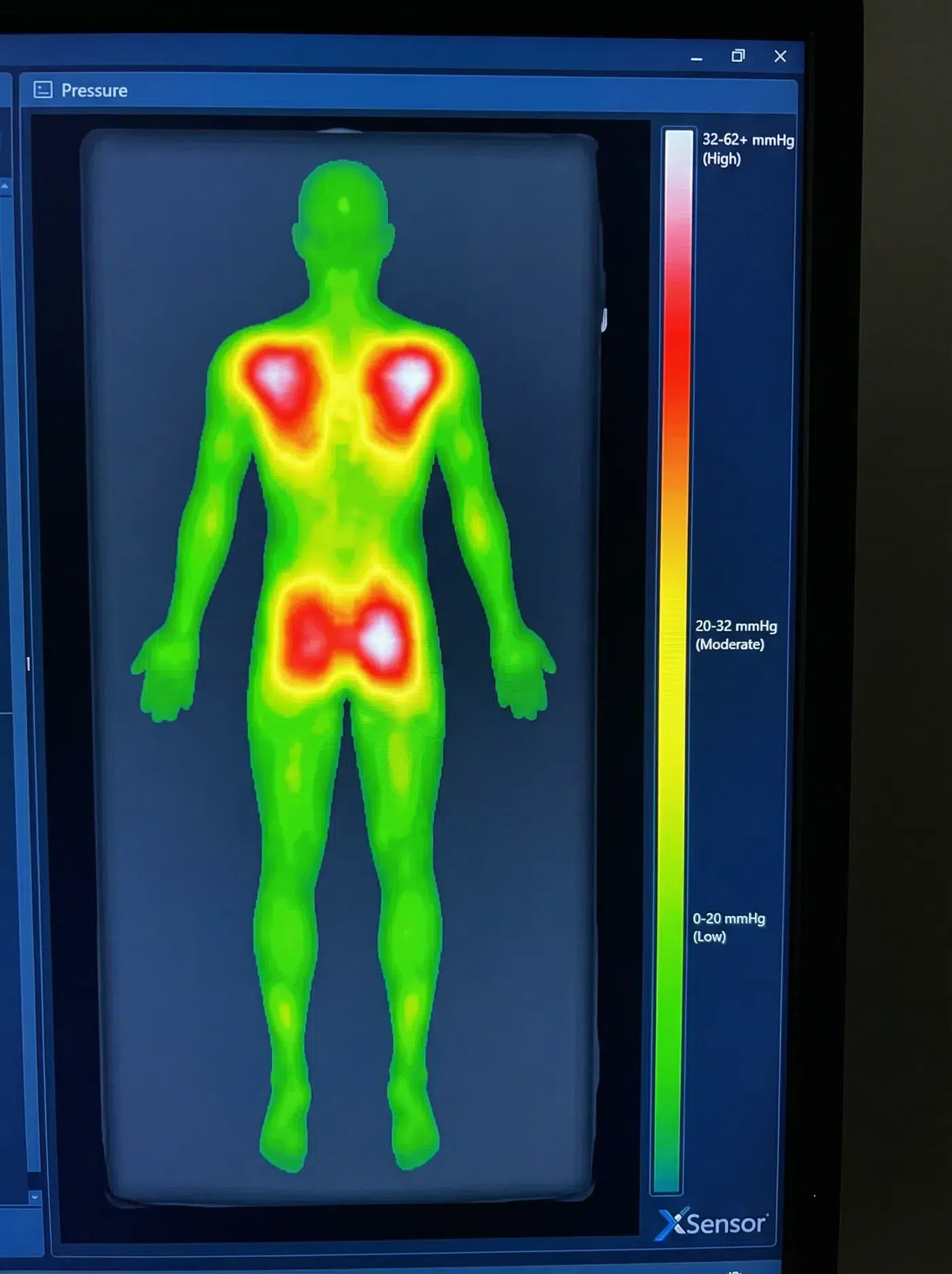
  • Pressure concentrated at contact areas.
  • Less uniform circulation.
  • Greater heat accumulation.
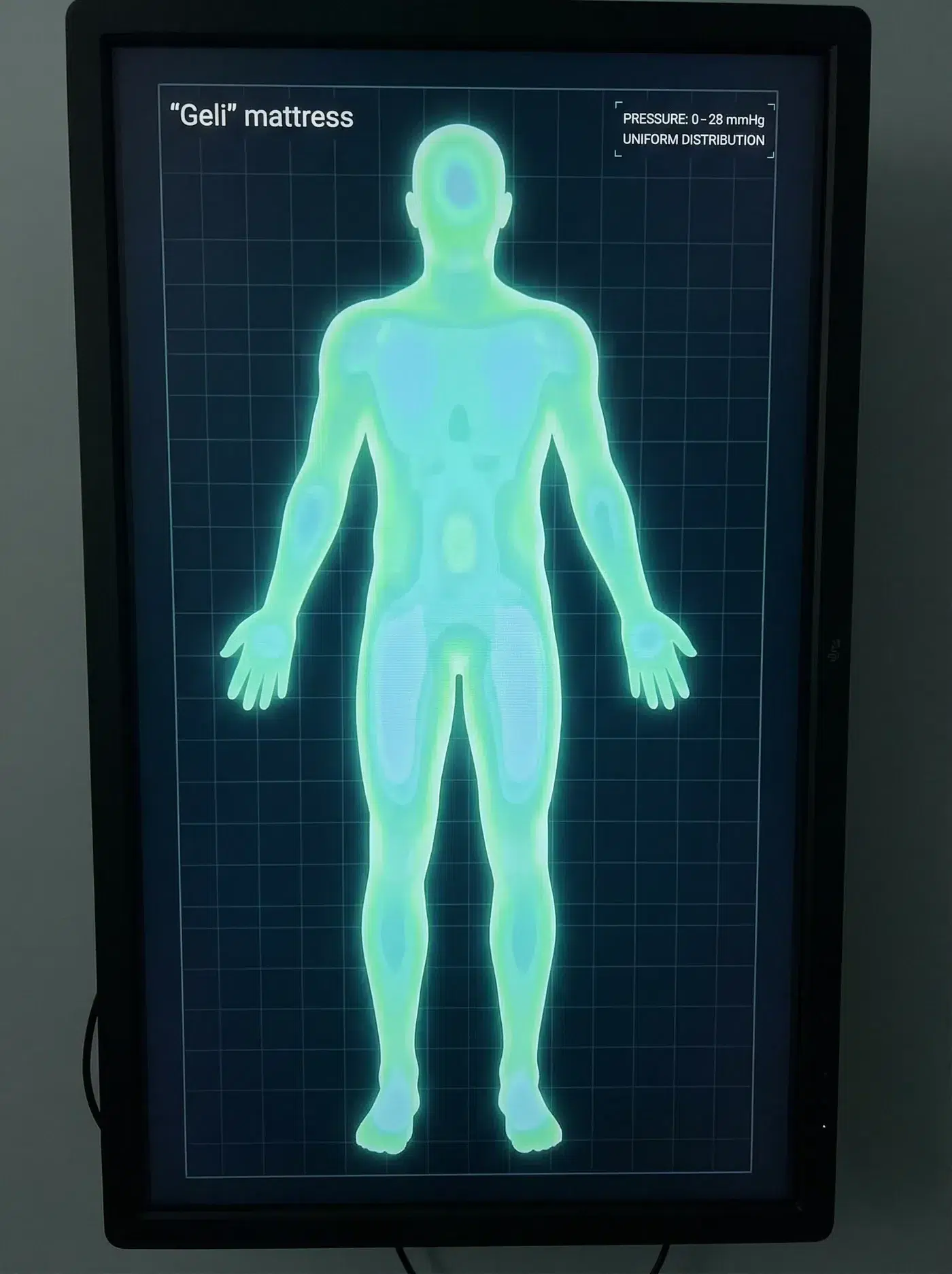
  • Better pressure redistribution.
  • More uniform support.
  • Heat distributed more naturally.

GELI — below the threshold

Better pressure redistribution helps limit areas of high compression.

Memory foam — peak of 62 mmHg

The red and white areas represent higher pressure peaks at the shoulders and hips.

The 45-minute heat trap

Memory foam tends to retain body heat rather than dissipating it quickly. Heat gradually builds up beneath the body before slowly dissipating, creating a thermal cycle that can recur several times during the night.

The result: a sensation of heat, micro-awakenings, and less continuous sleep.

The difference between cooling and dissipating heat

Thanks to its water-based beads, the Geli mattress can store up to 25 times more heat than traditional memory foam before reaching saturation.

It acts as a passive thermal battery, helping to dissipate heat rather than trapping it beneath the body.

A new sleep surface designed for the human body.

While traditional surfaces trap heat and build up pressure, Geli uses the movement of gel beads to promote better weight redistribution and a more stable sleep environment.

Pressure ischemia

When certain areas of the body are subjected to sustained pressure exceeding approximately 32 mmHg, blood circulation at the points of contact may be reduced, initiating a cycle of tissue compression.

To reduce numbness caused by pressure, the body makes micro-movements and undergoes micro-awakenings that fragment sleep throughout the night.

When circulation returns after a period of prolonged compression, the tissues undergo a localized inflammatory response and oxidative stress.

Night after night, the same areas of the body absorb a significant amount of pressure, which can hinder recovery and increase tissue fatigue over time.

A new sleeping surface designed for the human body.

While traditional surfaces accumulate heat and pressure, Geli uses the movement of gel beads to promote better weight redistribution and a more stable sleeping environment.